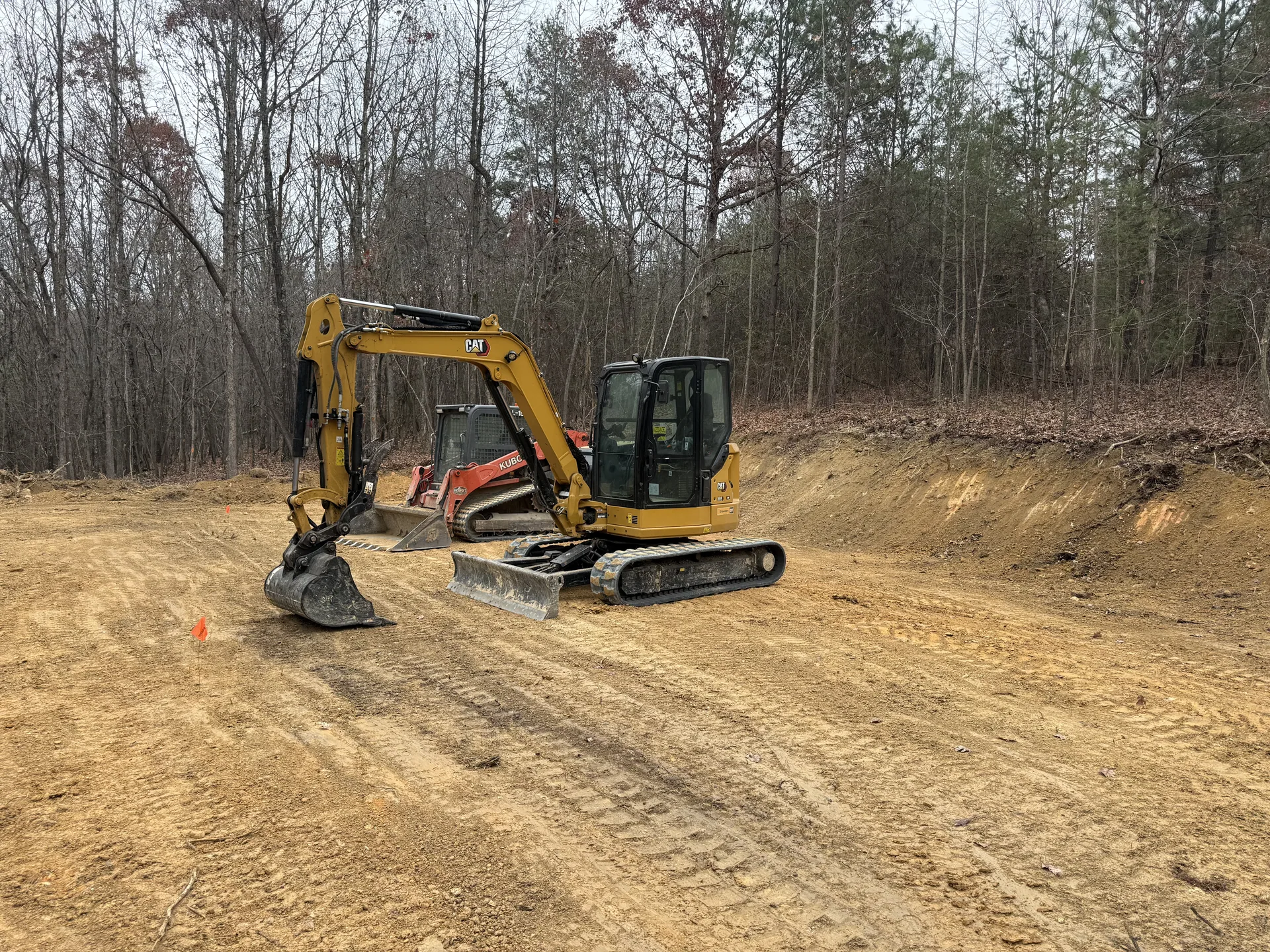
A retaining wall on a sloped Hixson, TN lot turns a steep, eroding bank into usable yard, but it only lasts when height, material and drainage fit the ground behind it.
When Does a Sloped Yard Need a Retaining Wall?
A wall makes sense when soil is creeping downhill, a slope is too steep to mow or plant safely, or erosion is undercutting a driveway, patio or foundation.
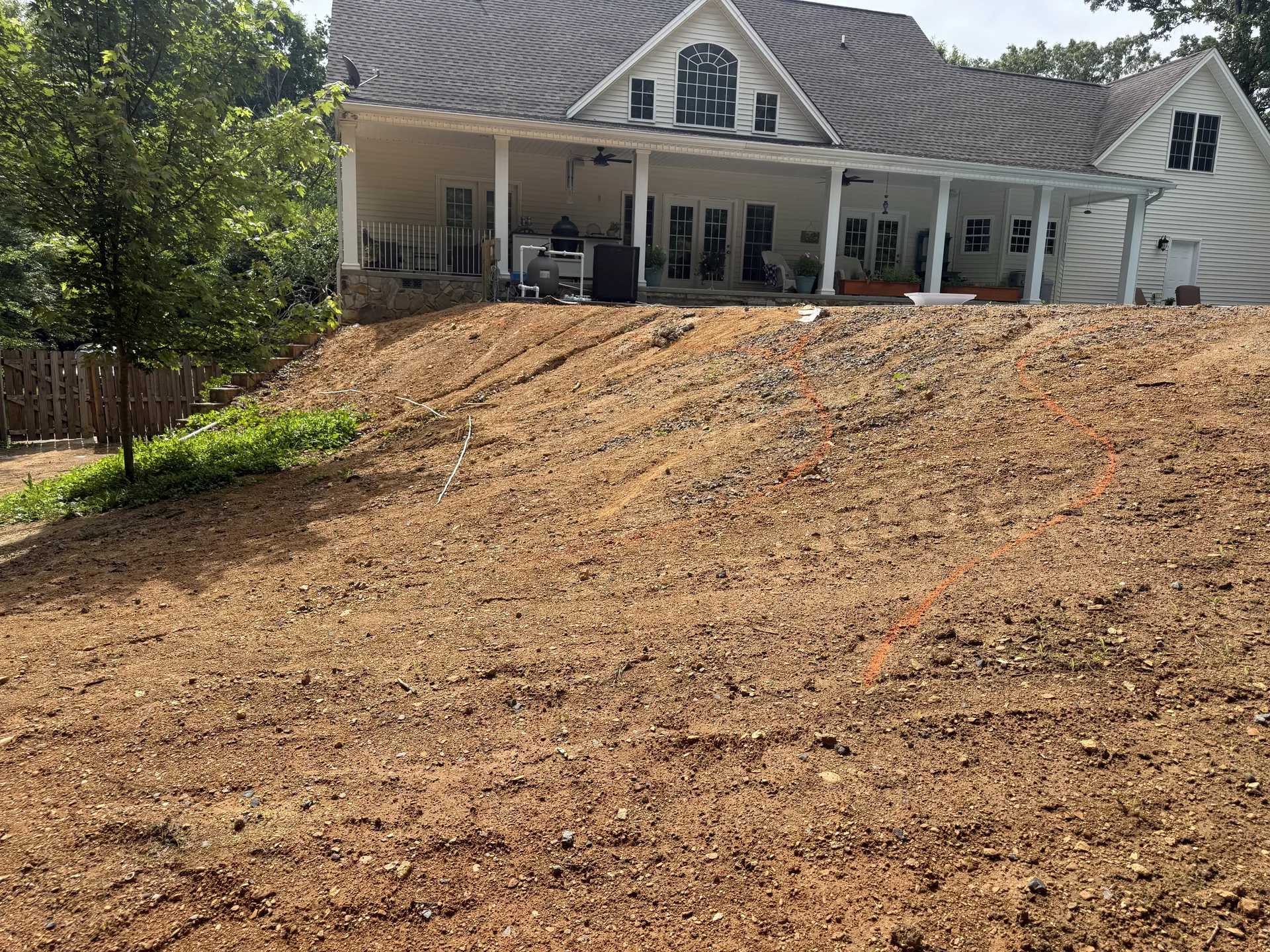
Hillside lots around Hixson, TN are common, and many homes sit on pads cut into the slope with a bank rising behind the house or falling away below it. Over time, rain loosens that bank. You may notice soil washing onto the driveway, a leaning fence line, exposed roots or a patio edge that is starting to crack and drop.
Sometimes grading and drainage alone solve the problem without a wall. Other times the slope needs to be held back so the ground above it stays put. An on-site look tells you which, and it is worth knowing before you invest in either.
Which Retaining Wall Material Fits Your Project?
Segmental block, natural stone and timber are the three most common choices, and the right one depends on wall height, the load the wall carries, your budget and the look you want.
Each material has its strengths:
- Segmental block stacks in interlocking courses and suits taller walls, especially when an engineered block system with reinforcement is needed on a steeper hillside lot.
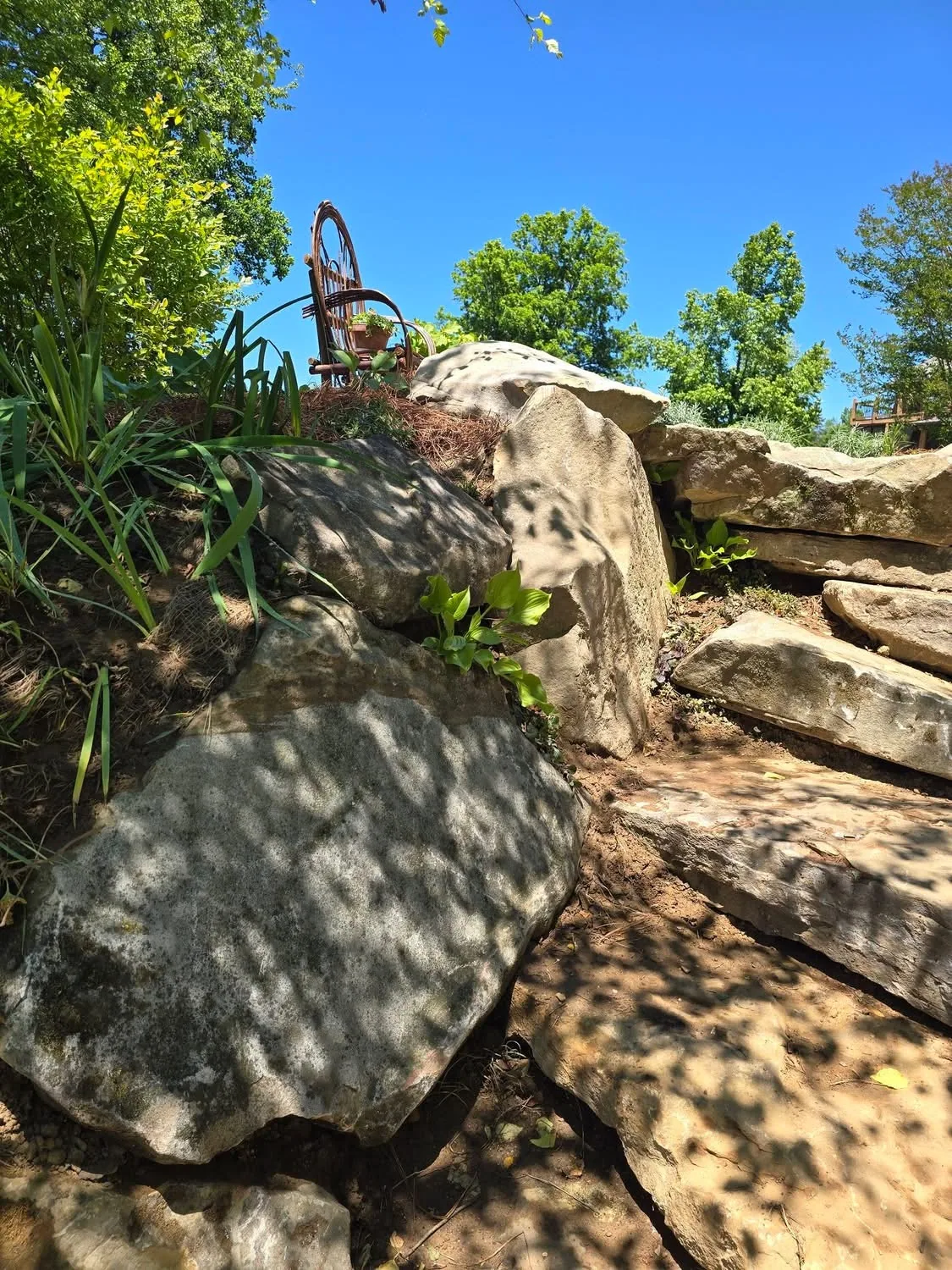
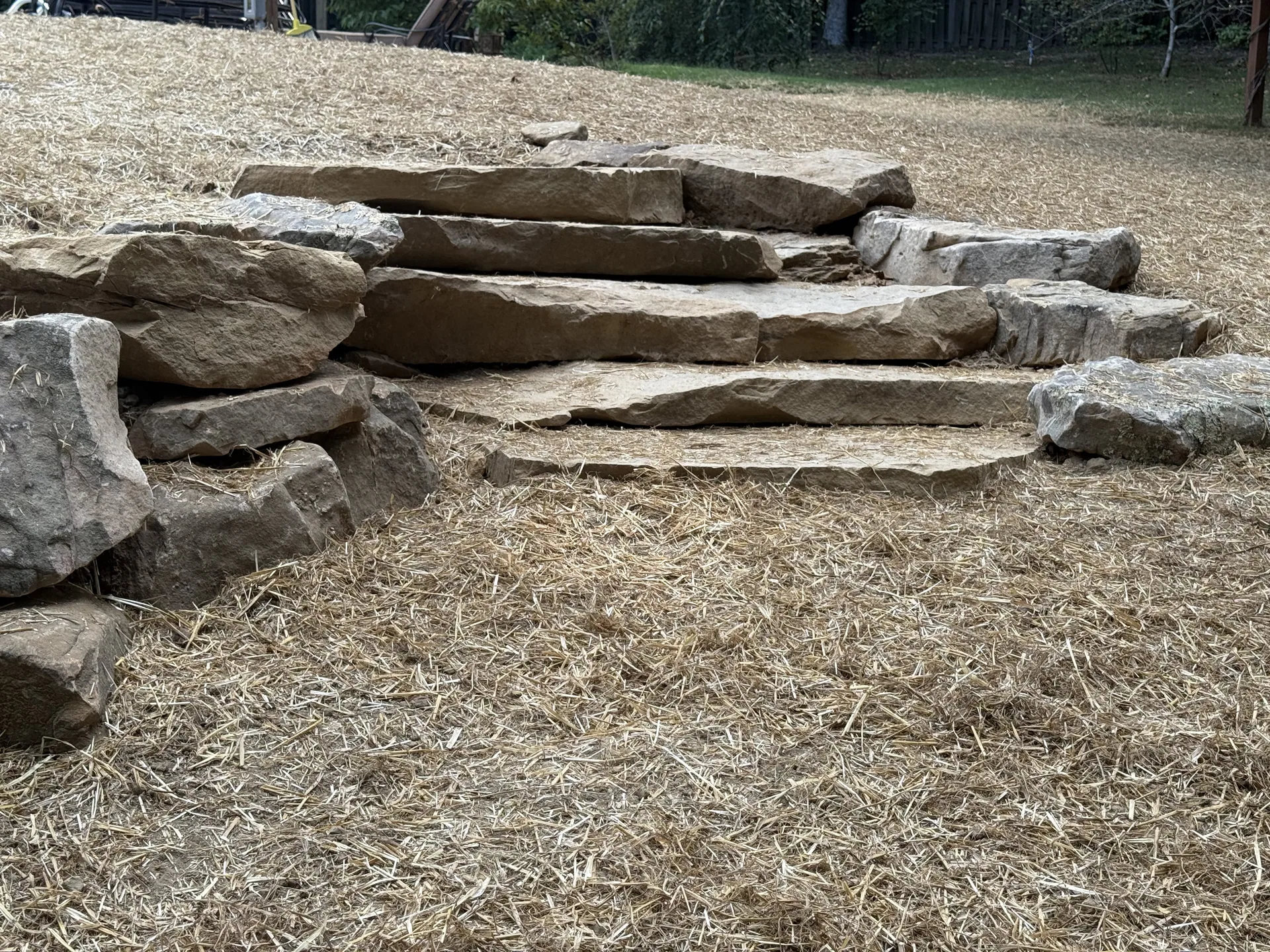
- Natural stone gives a wall a look that blends with wooded Tennessee terrain and works well for lower walls and garden terraces.
- Timber is often a budget-friendly option for shorter landscape walls and raised beds where the load is light.
Height changes the conversation. A short border wall that edges a flower bed carries very little soil. A wall holding back a full hillside behind a house carries a great deal, and taller walls usually call for reinforcement tied back into the slope. Choosing the material based on the load, rather than looks alone, is what keeps a wall standing.
Why Is Drainage Behind the Wall So Important?
Water that builds up behind a retaining wall pushes against it, and that pressure is what causes walls to crack, bow or fail, so drainage is built into the wall from the start.
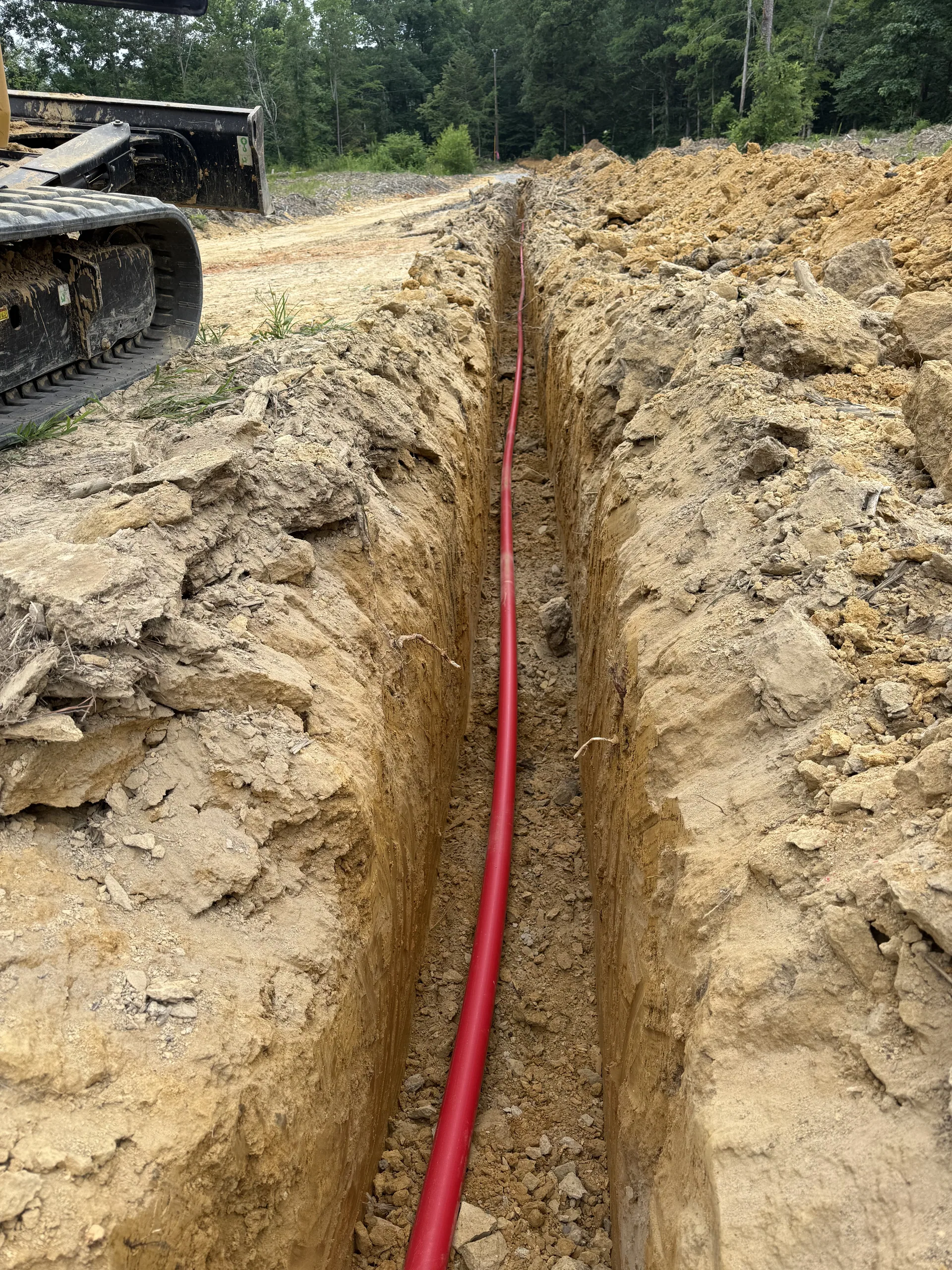
Red clay soil holds moisture and swells when it is saturated. Behind a wall, that wet clay presses outward with every storm. A properly built wall relieves the pressure with compacted gravel backfill behind the face and, where needed, a French drain that collects groundwater and carries it to a safe discharge point.
Skipping drainage is the most common reason retaining walls fail early. A wall can look perfect the day it is finished and begin leaning after a few wet seasons if water has no way out. On sloped yards, drainage often extends above and below the wall as well, with swales or ground cover to slow runoff on the slope itself.
What Does the Construction Process Look Like?
A sound wall starts with a soil and slope assessment, then design and material selection, excavation and a compacted base with drainage, and finally level courses with compacted backfill and finish grading.
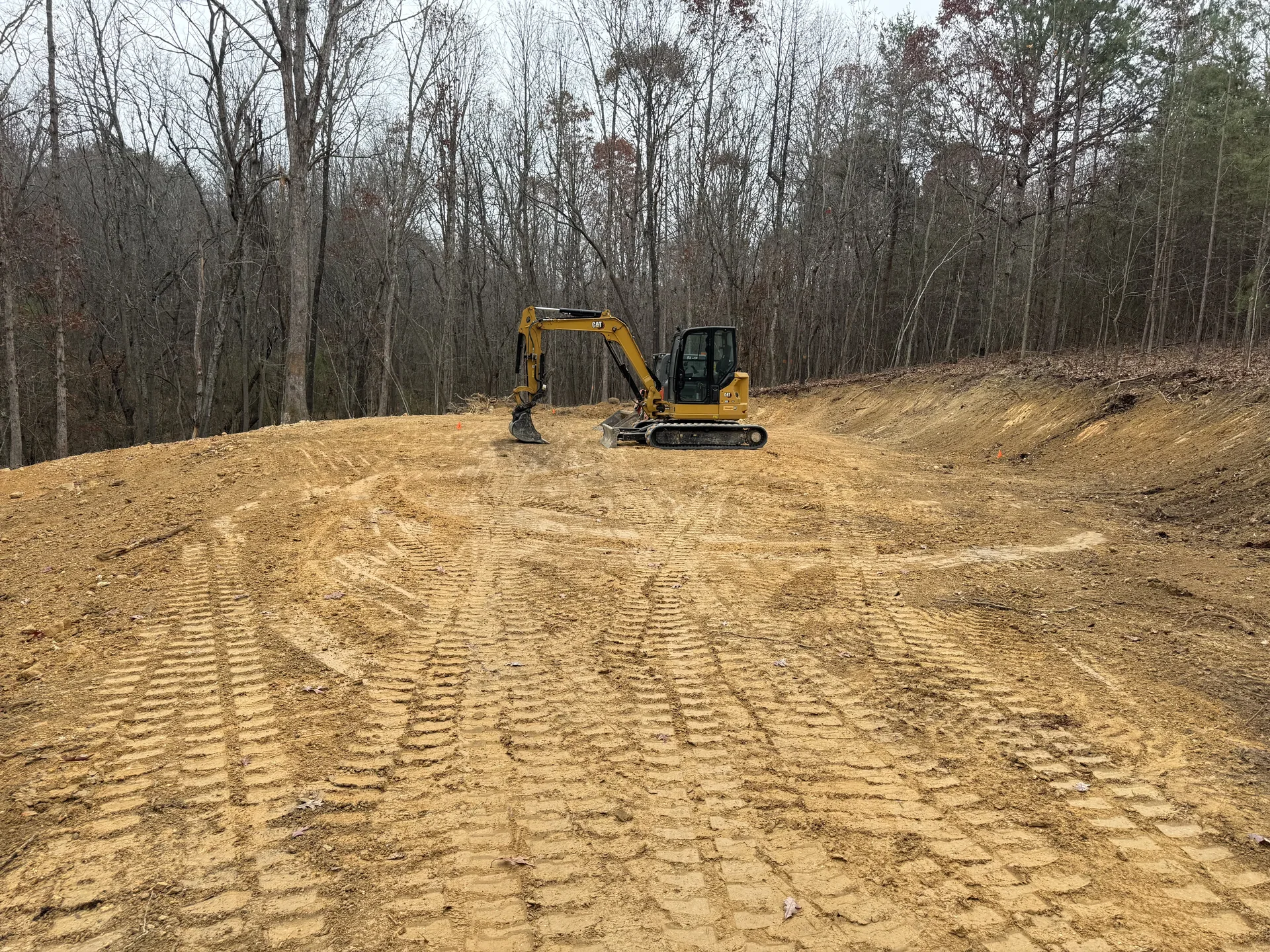
Our process follows four steps. We evaluate soil composition, slope grade and existing drainage to choose the right wall type and height. We recommend a wall system and plan any reinforcement needed for taller walls. Our crew excavates to the proper depth, compacts a gravel base and installs drainage behind the wall. Then we build in level courses, backfill with compacted aggregate and finish grade the surrounding area.
Because one crew handles the full scope, related work can be done in the same project. That might include land clearing and grading before the wall goes in, or gravel, mulch and rock delivery and landscape lighting along the wall cap once it is finished.
How Can You Plan Ahead for Your Wall?
Before calling a contractor, note where water runs during rain, measure roughly how tall the slope is, and think about how you want to use the space the wall creates.
Those details help shape the conversation. A terrace for a garden, a flat play area for kids and a wider driveway each lead to different wall heights and layouts. Photos of the slope after a storm are especially useful, because they show where water is doing the damage.
Evergreen Excavation & Landscaping builds retaining walls for homeowners in Hixson, TN and across the surrounding ridge and valley communities, sized to the load each wall carries and paired with the drainage it needs.
If a slope on your property is eroding or too steep to use, call Evergreen Excavation & Landscaping at 423-716-1551 to schedule your retaining wall assessment.